

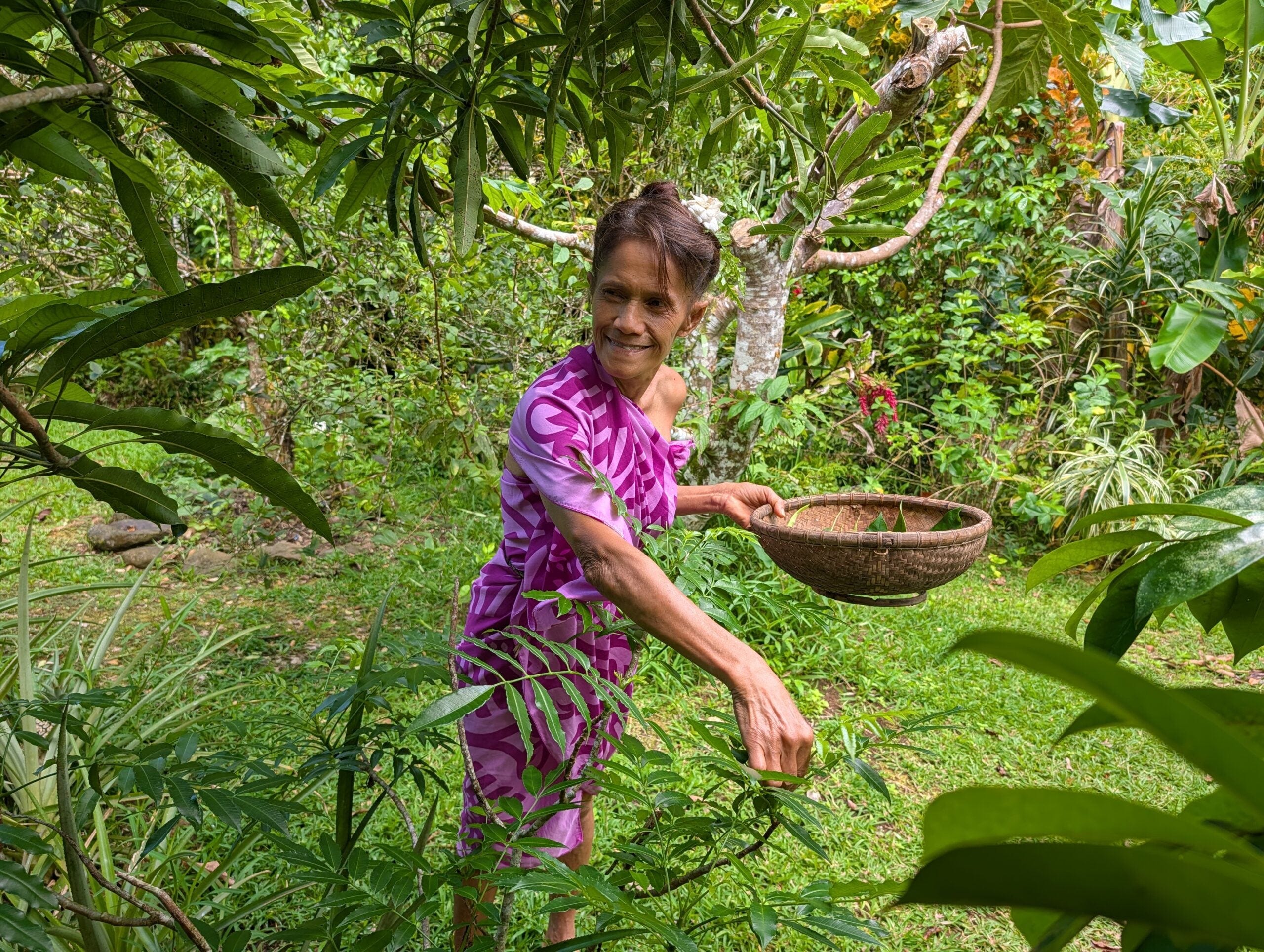
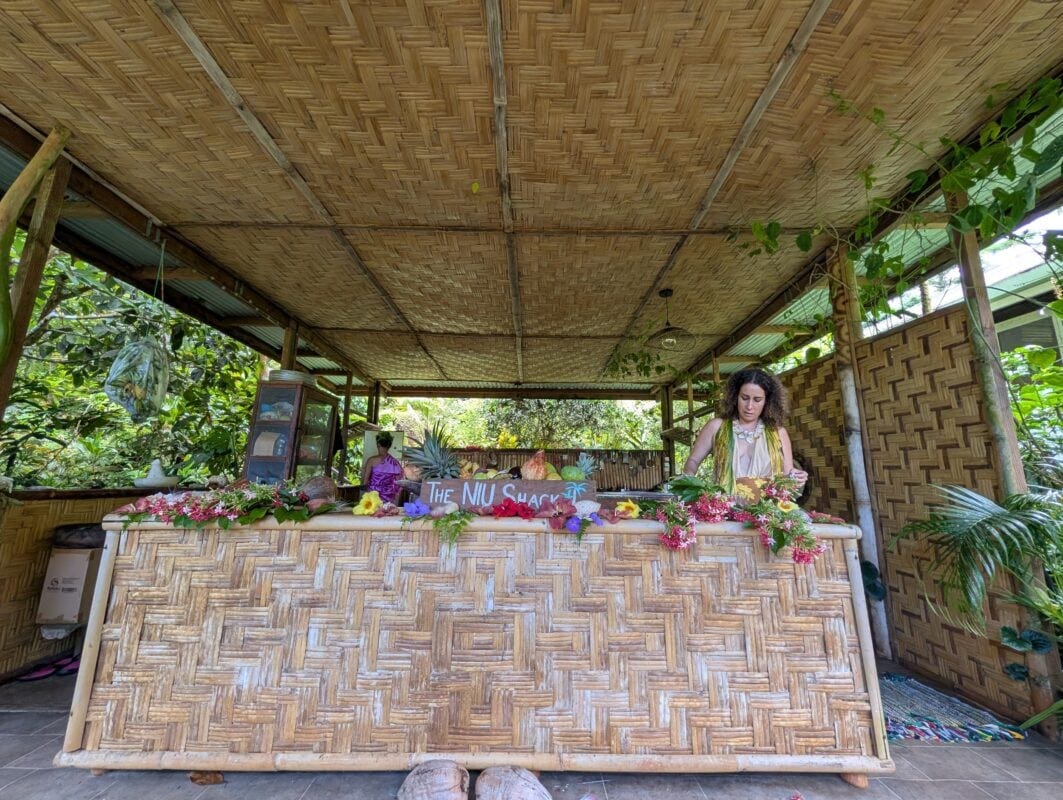
Vicky Tohopu’s quiche defies French tradition. She binds it not with butter and flour, but with a grated breadfruit shell harvested steps from her open-air kitchen. Inside there’s a fragrant mixture of coconut, basil, and lime pulled from the valley’s volcanic soil.
Under the table, a puppy named Cleopatra, marked by natural eyeliner, chews on a guest’s slipper.
“Everything is vegan,” Tohopu says.
She gestures to the jungle surrounding the NIU Shack on the island of Raiatea. The air smells of wet earth and heavy rain, worlds away from the manicured, overwater-bungalow fantasy of French Polynesia.
Survival in the mountains
Tohopu built this mountain refuge to survive. Fifteen years ago, doctors gave her two months to live. She rejected the diagnosis and returned to her ancestral land. She unplugged herself from the grid, installed solar panels, and pumped fresh water from the river.
She healed herself through a radical return to nature, and now she feeds visitors the proof: fresh coconut water that fizzes on the tongue like soda, a natural carbonation that occurs as the nut dries and the sugars turn.
“This is the beginning of the process,” she tells visitors who come for yoga and plant-based cooking. “The real change happens when you get back home.”
Tahiti’s outer islands, where time moves differently
A different reality thrives on Tahiti’s outer islands. Here, sustainability is not a slogan, but a rhythm of life dictated by the land and the ancestors. In a world obsessed with speed and efficiency, these islanders believe real resilience requires a different currency entirely: patience.
The rhythm of the vanilla bean
On Huahine, a short ferry ride from Raiatea, slowness drives the economy.
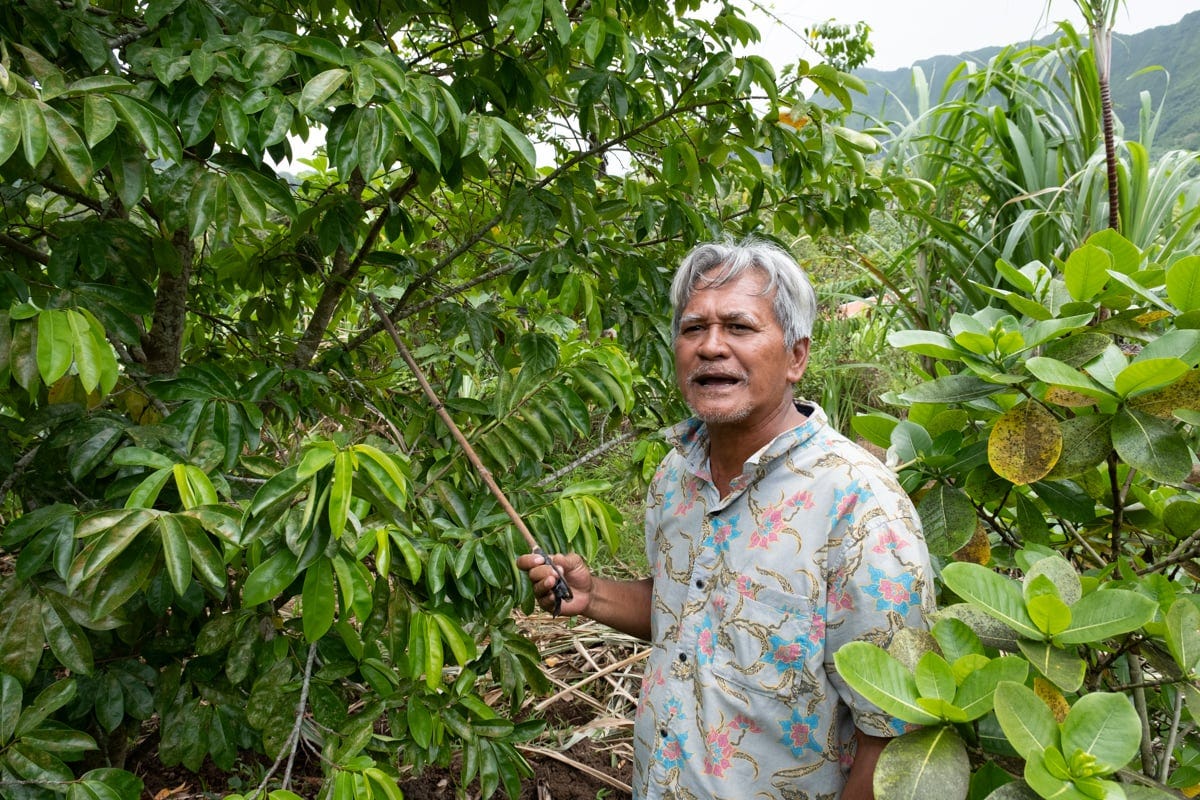
On a plastic folding table at the La Mao plantation, the air is heavy and fragrant. Joe Maraama, a guide with a comedian’s timing, holds up a dark, wrinkled pod. Vanilla refuses to be rushed. The vine demands three years to mature. When the orchid finally blooms, it opens only in the morning; farmers must pollinate it by hand before noon. This clock dictates the island’s rhythm.
“You work only half a day,” Maraama says. “No rush.”
Locals surrender the afternoon to the Pacific pace: fishing, swimming, drinking beer, playing ukulele.
Harvest deepens the commitment. Beans can’t simply bake in the sun. Farmers have to cure them for three hours a day over four months to capture the flavor. Then, to distribute the oils and texture, farmers rub every bean by hand once or twice a week.
Maraama grins and pantomimes the motion. “One massage, one shot,” he laughs, referencing the local brew, Hinano Beer.
Tahitian vanilla commands a global price because farmers won’t hurry. Its value lies not just in flavor, but in the refusal to trade quality for speed.
Waiting for the tide to turn
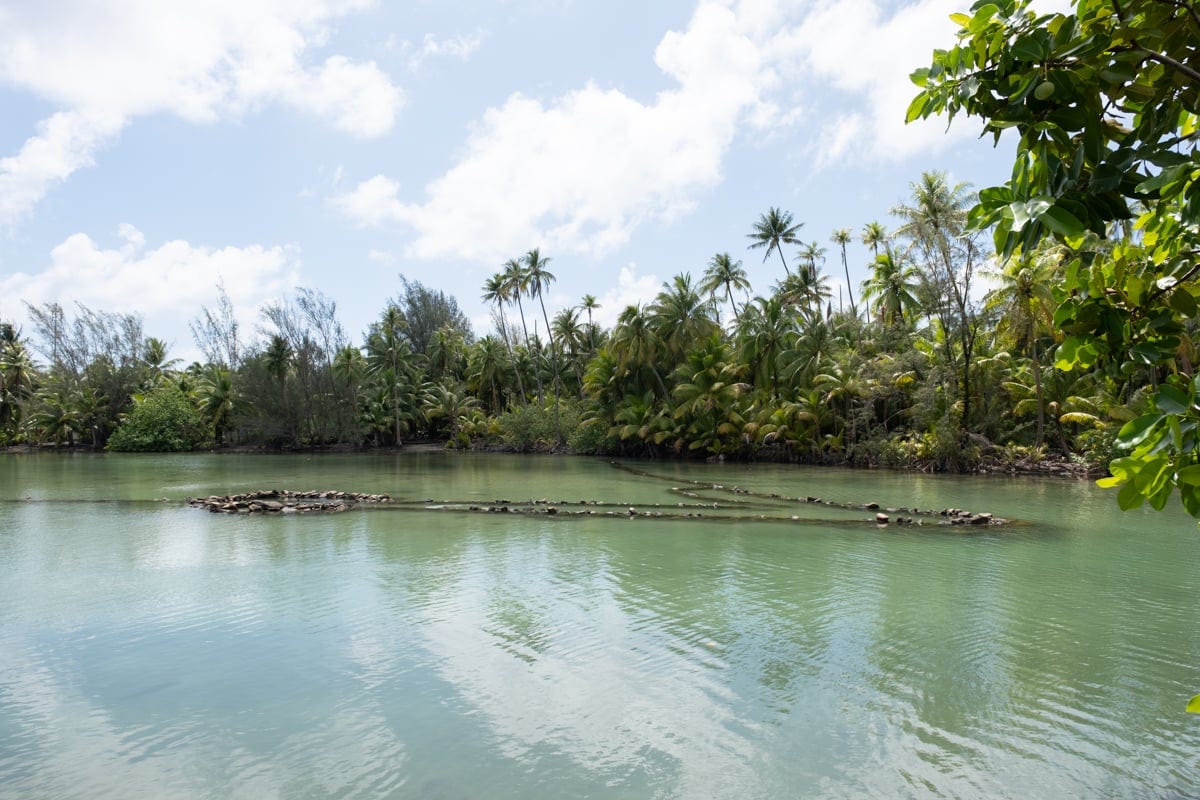
Huahine’s landscape proves that working with the environment is better. Near the village of Maeva, ancient stone V-shapes cut across the water. These fish traps, some dating to 1888, catch mullet, snapper, and parrotfish riding the high tide back to the sea.
They require no bait, no lines and no fuel.
“The fish come in at high tide,” Maraama says. “At low tide, they can’t go out.”
This sustainable technology lets the fisherman sit back with a cooler of beer for 30 minutes. The ocean delivers dinner.
Ancestral practice meets modern living
Erwin Eperania, the sustainability coordinator for Tahiti Tourisme, says Tahiti is looking beyond carbon footprints on the outer islands.
“Sustainability is not just about conservation,” he says. “It’s about respect for land, sea, and the people whose hands care for them.”
The government moves to protect this fragile economy of patience. It has applied for a Protected Geographical Indication (PGI) to shield the hand-massaged Tahitian vanilla bean from cheap global rivals.
Tahiti is also rewriting your itinerary. Officials encourage tour operators to send visitors to off-grid spots like the NIU Shack, perhaps to prove that luxury does not require air conditioning.
Yet challenges remain. Fresh water is scarce, and trash gets shipped back to Tahiti Nui.
Eperania offers a spiritual directive: “Let the Mana of each island set the pace.”
(Mana is a sacred force that embodies the life and spirit of the islands, the people, and the culture.)
Tourism officials hope travelers will stop rushing and settle into the local rhythm.
“When travelers slow down,” Eperania adds, “they leave a lighter footprint.”
On Raiatea and Huahine, locals measure their worth differently. They trade quick profit for quality, and connectivity for patience. The price of paradise is not a room rate. It is the willingness to slow down to massage a bean, or wait for the tide.

Christopher Elliott
Christopher Elliott is the founder of Elliott Advocacy, a 501(c)(3) nonprofit organization that empowers consumers to solve their problems and helps those who can’t. He’s the author of numerous books on consumer advocacy and writes three nationally syndicated columns. He also publishes the Elliott Report, a news site for consumers, and Elliott Confidential, a critically acclaimed newsletter about customer service. If you have a consumer problem you can’t solve, contact him directly through his advocacy website. You can also follow him on X, Facebook, and LinkedIn, or sign up for his daily newsletter.